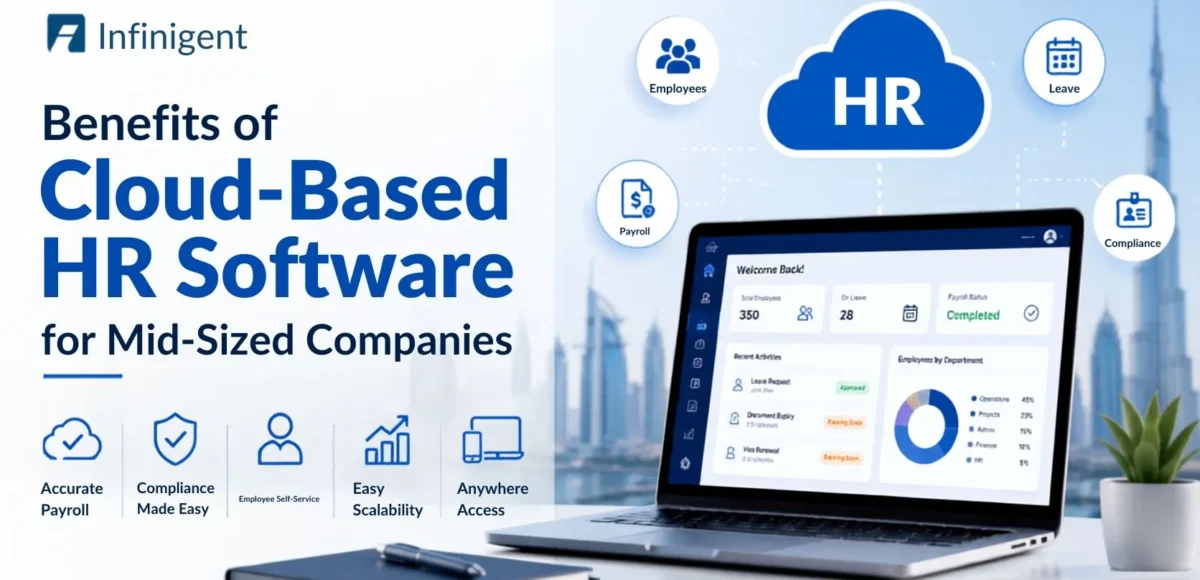
Benefits of Cloud-Based HR Software for Mid-Sized Companies
Quick Answer:
Cloud-based HR software helps mid-sized companies save time, reduce payroll errors, and manage employee data more efficiently. It automates tasks like payroll processing, leave management, document tracking, and compliance monitoring. With secure online access, HR teams and employees can work from anywhere. For growing businesses in the UAE, cloud HR software also supports WPS payroll, visa tracking, and UAE labour law compliance, making HR management simpler and more accurate.
Running HR for a mid-sized company is hard work. You have more employees than a small business, but you may not have a big HR team yet. This is where many companies in the UAE start to struggle. Spreadsheets get messy. Payroll takes too long. Visa renewals slip through the cracks. The good news is that cloud-based HR software can fix most of these problems. This article looks at the real benefits of cloud-based HR software for mid-sized companies, with a focus on what matters most for businesses growing in the UAE and the wider Gulf region.
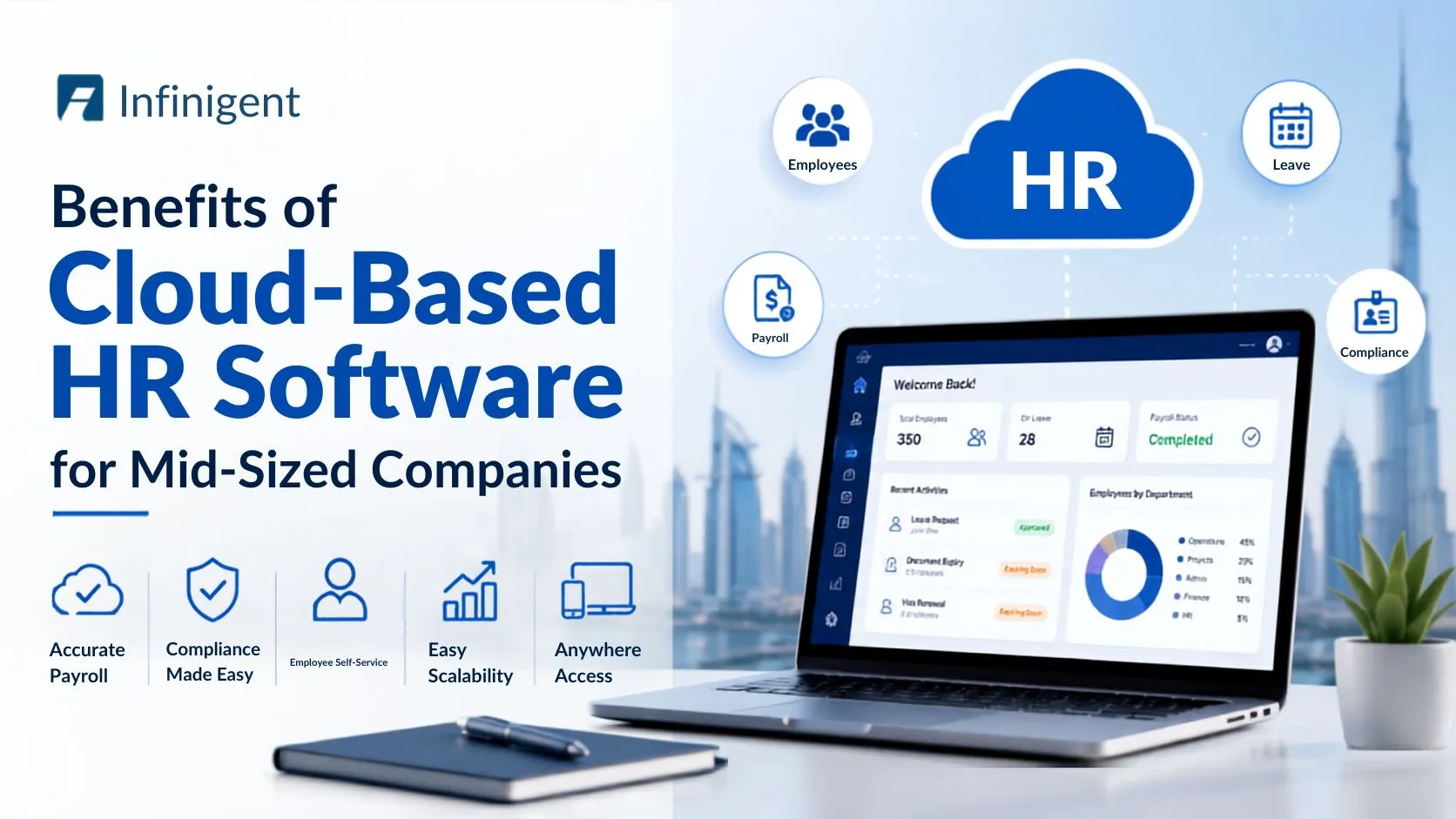
What Is Cloud-Based HR Software?
Cloud-based HR software is HR software that runs on the internet, not on one office computer. You do not need to install it on every machine. Your team can log in from a laptop, a tablet, or even a phone. Employee data stays on secure servers, and updates happen automatically in the background.
This is different from older HR systems that lived on one server inside an office. If that server crashed, important data could be lost. Cloud HR software keeps information backed up and ready, even during a power cut or when your team works across different sites.
The Hidden Cost of Manual HR Processes
Many mid-sized companies still run HR on spreadsheets, paper files, and long email chains. This feels fine with 50 employees. It becomes a real problem once a company grows past 200 staff.
Manual payroll is one of the biggest pain points. One wrong formula in a spreadsheet can lead to incorrect salaries, late payments, or penalties for breaking UAE labour law. The Wages Protection System requires that companies pay salaries on time and correctly. If people do this work by hand, the Wages Protection System is more likely to have mistakes. This is because people can make errors when they do things manually. The Wages Protection System needs payments to work properly.
Scattered spreadsheets cause other headaches too. HR teams lose hours each week pulling reports together, chasing managers for approvals, and checking which employees have an expiring visa or labour card. None of this adds value to the business. It simply eats up time that could go toward hiring, training, or supporting staff.
Benefits of Cloud-Based HR Software for Mid-Sized Companies
Cloud-based HR software solves the problems above and adds real value for growing companies. Here is a closer look at the benefits of cloud HR software that matter most.
- Faster, more accurate payroll – Cloud HR software calculates salaries and deductions and prepares WPS-ready salary files automatically, cutting down errors and late payments.
- Built-in compliance support – Strong HR software tracks document and visa expiry dates, sends reminders ahead of time, and helps calculate End of Service (EOS) benefits in line with UAE labour law.
- Employee self-service – Staff can use it to look at their payslips, ask for time off and change their information. They do not have to send an email to the Human Resources team for everything they need. This makes things a lot easier for the Employee and for the Human Resources team at the company. The Employee can just go to the self-service portal to do these things on their own.
- Easy scalability – As a company adds employees, departments, or new branches, cloud HR software grows with it, without needing new hardware.
- Anytime, anywhere access – The managers and HR staff can approve requests and check reports. They can also review employee profiles from any device. This is really useful for companies that have staff working on lots of project sites.
Solving Payroll and Compliance Problems
Picture a mid-sized construction company in the UAE with around 350 employees spread across two project sites. Before moving to cloud HR software, the HR team managed payroll on spreadsheets, tracked visa expiry dates on a printed calendar, and processed final settlements by hand.
Sometimes salary mistakes happen. This was especially true when overtime or extra site pay changed. Sometimes visa renewals were forgotten. This created a risk of not following the rules. After switching to cloud-based HR software, the same team set up automated payroll runs, expiry reminders for visas and labour cards, and a self-service portal for site staff to check their own payslips and request leave.
The result was simple: fewer payroll mistakes, on-time WPS transfers, and a clear return on investment from the switch, with HR staff spending less time on paperwork and more time supporting employees.
Conclusion:
Not all cloud HR software is the same. When comparing options, look for a few key things.
First, you need to see if the software knows the rules that apply in your area, like the laws about work in the United Arab Emirates, the way payroll is done with WPS and the things you have to do for visas and human resources. You have to make sure the software understands these rules, especially the UAE labour law and things like WPS payroll and visa-linked HR processes. A system built mainly for a different country may not handle these correctly. Second, look for self-service features for both employees and managers, since this reduces the daily workload on the HR team. Third, make sure the software can grow with the business. A mid-sized company today may double in size within a few years, and the HR software should be ready for that.
So you should ask about support and data security. The data of employees is very sensitive, so the provider should give you protection and customer support that is easy to get in touch with. If you want to see how this works for a company like yours, you can get in touch with our team to take a look at support and data security for your employee data.
Frequently Asked Questions:
Cloud-based HR software works online instead of being installed on a single office computer. Employees and HR teams can access it from any device with an internet connection, such as a laptop, tablet, or smartphone. All employee information is stored securely in the cloud and backed up regularly. This makes it easier to manage HR tasks from anywhere and reduces the risk of losing important data. Yes, most cloud-based HR software is designed to keep employee data safe. Trusted providers use security features like data encryption, secure servers, and regular backups. These tools help protect information from unauthorized access and data loss. In many cases, cloud systems offer stronger security than storing employee records on office computers or paper files. Cloud HR software helps companies follow UAE labour law by automating important HR tasks. It can track visa and document expiry dates, send reminders before deadlines, and calculate End of Service (EOS) benefits correctly. Many systems also support WPS payroll requirements. This reduces the risk of missing important dates, making mistakes, or facing penalties for non-compliance. Yes, many cloud HR software solutions are built to support the UAE Wages Protection System (WPS). They can automatically calculate salaries, deductions, and allowances while creating WPS-compliant salary files. This helps businesses pay employees accurately and on time. It also reduces manual work and lowers the chances of payroll errors that could lead to compliance issues. Most cloud HR software providers make the transition simple and smooth. They often help with data migration, setup, and employee training. This means businesses can move from spreadsheets or older systems with little disruption. Once the system is running, HR teams usually save time because many tasks become automated, making daily HR operations easier and more efficient. No, cloud-based HR software is useful for businesses of all sizes. Mid-sized companies often benefit the most because they have more employees to manage but may not have a large HR team. The software helps automate payroll, leave management, and employee records. This saves time, improves accuracy, and allows HR teams to focus on supporting employees and business growth. The cost of cloud-based HR software depends on the number of employees, the features required, and the software provider. Many companies offer flexible pricing plans, so businesses only pay for the tools they need. While costs vary, the software often saves money in the long run by reducing payroll errors, manual work, and administrative tasks. 1. What does cloud-based mean in HR software?
2. Is cloud-based HR software safe for sensitive employee data?
3. How does cloud HR software help with UAE labour law compliance?
4. Can cloud HR software handle WPS payroll for UAE companies?
5. Will switching to cloud HR software disrupt current HR processes?
6. Is cloud-based HR software only useful for large companies?
7. How much does cloud-based HR software cost for a mid-sized company?